

The Kingdom of Belgium is a federal state
Belgium became independent in 1830. Between 1970 and 1993, the country evolved into a more efficient federal structure. This occurred through five state reforms (in 1970, 1980, 1988-89, 1993 and 2001). As a result, the first Article of the Belgian constitution reads today: ‘Belgium is a federal state, composed of communities and regions’.
The power to make decisions is no longer the exclusive preserve of the federal government and the federal parliament. The leadership of the country is now in the hands of various partners, who independently exercise their authority within their domains.
Broadly speaking, the powers of the Federal State cover everything connected with the public interest. In the general interest of all Belgians, the Federal State manages the public finances, the army, the judicial system, social security, foreign affairs which is responsible of the asylum and migration issues ( https://diplomatie.belgium.be ) as well as substantial parts of public health and home affairs. So the Federal State has powers in these areas.
The Federal State retains a considerable “common heritage”. This includes the judicial system, the army, the federal police, social security and the important laws in the field of social security (unemployment, pensions, child benefit, health insurance), public debt, monetary policy, prices and incomes policy, protection of savings, nuclear energy, State-owned companies (such as Belgian Railways, the Post Office), the federal scientific and cultural institutions, etc. Furthermore, the Federal State is responsible for the obligations of Belgium and its federalized institutions towards the European Union or NATO.
The Federal Government’s powers also cover everything that does not expressly come under the Communities or Regions. The Federal State also has powers for exemptions and restrictions on the powers of the Communities and the Regions.
The Communities are autonomous in the field of education, for example, but the minimum requirements for the award of qualifications remains a matter for the federal government, as does the compulsory aspect of education and the pension scheme and maintain foreign relations.
As a federal state Belgium is composed of three communities, 3 regions and 10 provinces
Decision-making power is shared between the federal government, communities and regions, each of which has its own Parliament and government cabinet.
The federal government has authority over all areas of national interest (diplomacy, military, justice, finance, Social Security, a major part of public health, etc.).
The redistribution of power occurred along two lines. The first line relates to language and, in a broader sense, to everything related to culture. The result was several communities. The concept of ‘community’ refers to persons that make up a community and the bond that unifies them, namely their language and culture. Belgium sits across the fault line that separates German and Latin cultures. This explains why the country has three official languages: Dutch, French and German. As a result, Belgium today, has three communities: the Flemish Community, the French Community and the German-speaking Community. These communities therefore correspond with the population groups.
Three communities:
The communities have jurisdiction in matters concerning language: culture, education, youth programmes, etc.
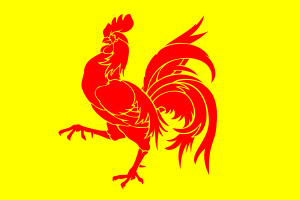
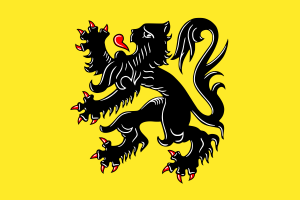

The second line of state reform was historically inspired by economic interests. The regions, which aspired to more economic autonomy, conveyed these interests. The establishment of the three regions was the result: the Flemish Region, the Brussels Capital Region and the Walloon Region. Up to a certain level they can be compared with the American states or the German ‘Länder’.
Regions have powers in fields that are connected with their region or territory in the widest meaning of the term.
So the Flemish Region, the Brussels-Capital Region and the Walloon Region have powers relating to the economy, employment, agriculture, water policy, housing, public works, energy, transport (except Belgian Railways), the environment, town and country planning, nature conservation, credit, foreign trade, supervision of the provinces, communes and intercommunal utility companies.
They also have powers relating to scientific research and international relations in those fields.
There are three regions. The regions are in charge of all matters concerning economic development, jobs and land use (planning, housing, environment, farming, transport, economics, applied research, etc.).
For the French-speaking community, the French Community Commission (COCOF ) in Brussels and the Walloon Region also have authority for welfare, professional training, social inclusion and tourism. For the Dutch-speaking community, the communities and regions are merged.
The country is further divided into 10 provinces and 589 municipal councils.
The Municipality is the institution closest to residents. You will have contact with the municipality where you reside for a number of important matters in your daily life, such as birth, death and marriage records; culture; youth and sports programmes; the environment; health; education; safety; jobs and training. The municipality runs many services (police, schools, day-care centers, roads, etc.) within its borders. It is also the place to begin many administrative formalities and procedures.
Sometimes, the Municipality will be your primary contact, and you will have to deal with them when you request a residence card. Contact your Municipality to renew your residence card at least 45 days before its expiry date.