

Religion in Belgium is diversified, with Christianity, in particular the Catholic Church, representing the largest community, though it has experienced a significant decline since the 1980s (when it was the religion of over 70% of the population). However, according to the latest Eurobarometer poll carried out by the European Commission in December 2018, the number of Christians increased by 10% from 52.5% in 2009 to 62.8% in 9 years, with Roman Catholicism being the largest denomination at 57.1%. Protestants comprised 2.3% and Orthodox Christians comprised 0.6%. Non religious people comprised 29.3% of the population and were divided between those who primarily identified as atheists (9.1%) or as agnostics (20.2%). A further 6.8% of the population was Muslim and 1.1% were believers in other religions Belgium’s policy separates the state from the churches, and freedom of religion of the citizens is guaranteed by the country’s constitution.
According to a 2010 Eurobarometer poll :
37% of Belgian citizens believe there is a God.
31% believe there is some sort of spirit or life force.
27% do not believe there is any sort of spirit, God, or life force.
5% declined to answer.
Some religious people dispute the precise figures, as it is unclear how many Belgians who say they believe in God are actually Christians and how many who call themselves Christians, but refuse the label “Catholic”, have severed all links to the Catholic Church. Also in dispute are how many Catholic Belgians have become deists or have joined small Protestant churches.
Chronological statistics
| Religious group | Population % 1981 | Population % 2009 | Population % 2015 | Population % 2018 |
| Christianity | 74.5% | 52.5% | 60.7% | 62.8% |
| Catholicism | 72.0% | 50.0% | 52.9% | 57.1% |
| Protestantism and other Christians | 2.5% | 2.5% | 6.2% | 5.1% |
| Orthodox Christianity | 1.6% | 0.6% | ||
| Islam | 3.0% | 5.0% | 5.2% | 6.8% |
| Judaism | 0.4% | 0.4% | 0.2% | 0.3% |
| Buddhism | – | 0.3% | 0.2% | 0.3% |
| Other religions and unspecified | – | – | 2.0% | 0.5% |
| Atheism | 2.5% | 9.2% | 14.9% | 9.1% |
| Not religious | 21.5% | 32.6% | 17.1% | 20.2% |
The Belgian constitution provides for freedom of religion, and the government generally respects this right in practice. However, government officials have the authority to research and monitor religious groups that are not officially recognized. There are a few reports of societal abuses or discrimination based on religious belief or practice, and some reports of discrimination against minority religious groups.
Belgian law officially recognizes many religions, including Catholicism, Protestantism, Anglicanism, Islam, Judaism, and Eastern Orthodoxy, as well as non-religious philosophical organizations (Dutch: vrijzinnige levensbeschouwelijke organisaties; French: organisations laïques). Buddhism is in the process of being recognized under the secular organization standard. Official recognition means that priests (called “counsellors” within the secular organizations) receive a state stipend. Also, parents can choose any recognized denomination to provide religious education to their children if they attend a state school. Adherents to religions that are not officially recognized are not denied the right to practice their religion, but do not receive state stipends.
After attaining autonomy from the federal government in religious matters, the Flemish Parliament passed a regional decree installing democratically elected church councils for all recognized religious denominations and making them subject to the same administrative rules as local government bodies, with important repercussions for financial accounting and open government. In 2006, however, Catholic bishops still appointed candidates to the Catholic Church councils because they had not decided on the criteria for eligibility; they were afraid that candidates might be merely baptized Catholics. By 2008, however, the bishops decided that candidates for the church councils had only to prove that they were over 18, a member of the parish church serving the town or village in which they lived, and baptized Catholic.
Food culture in Belgium
Find out about traditional Belgian cuisine and dishes to be found throughout the country…
With so many influences among its current varied population, it is not surprising that the Belgians have a passion for food and cooking. Various invaders throughout history including the Romans, Vikings, Spanish, French and English have all left their mark on the national cuisine.
The much quoted saying is that the Belgians cook their food with the finesse of the French but serve it in generous German size portions!
Many of the more hearty stews and soups are recipes handed down from one generation to another. Belgian chocolates and beer are internationally renowned and are in themselves a lure for many tourists with festivals celebrating both products.
Street stands selling waffles and chips are found almost everywhere for those wanting something quick. Restaurants tend to approach things more seriously and meals are seldom hurried.
Vegetarians and those with food allergies may find their options limited in some parts of the country.
Many Belgians and non-Belgians consider their food to be Europe’s second finest cuisine (behind the French). Flemish cuisine has a strong Dutch influence, as one might expect, whereas Wallonian cuisine is similar to French cooking, with lots of rich sauces.
There is a huge variety of places to eat out, from modest cafés to Michelin starred restaurants, throughout the country.
Most main dishes are meat or fish based – there is little vegetarian food on offer, except at specialist restaurants. Coastal areas tend to favour seafood dishes, and many dishes are livened up with herbs and spices. Medieval influences can often be found in dishes which combine sweet and sour tastes, such as Buttermilk Soup with Apples, or Braised Chicken with Grapes.
Desserts almost always involve pastries or chocolate.
Although wine (mostly French) is popular, beer is still without doubt the national drink and often accompanies a meal.
Boterhammen : Slices of rustic bread and an uncovered spread, often pâté or soft cheese, served on a cutting board. A typical variety is a slice of bread with sliced radishes, typically accompanied by a glass of gueuze.
Jambon d’Ardenne : particularly smoked ham and pâté, often made of game such as wild boar. The forested Ardennes region in the south of Belgium is renowned for this type of food.
Salade liégeoise : a potato salad with green beans, bacon, onions and vinegar. It is usually associated with Liège.
Tomate aux crevettes: a Belgian culinary specialty, composed of a hollow, unhunted tomato stuffed with peeled grey shrimps and mixed with mayonnaise.
Main dishes
Moules-frites: mussels cooked or steamed with onions and celery served with fries. The recipe has often been referred to as the country’s national dish but is also popular in the neighboring Nord region of France.
Carbonade flamande: a Belgian beef stew, similar to the French Beef Bourguignon, but made with beer instead of red wine. Served with bread or fries and mustard. Usually accompanied by a beer. This is also considered one of the national dishes, along with moules-frites.
Waterzooi: a rich stew and soup of chicken or fish, vegetables, cream and eggs, usually associated with the town of Ghent.
Chicons au gratin / gegratineerd witloof: Belgian endives au gratin in béchamel sauce with cheese. Often the endives are wrapped with ham.
Filet américain: Very finely minced ground beef eaten raw and cold. It is spread on a sandwich or bread with and sometimes topped with a sauce, usually with Sauce Américaine, and served with fries. When served as a dinner, it is mixed with onions and capers like steak tartare, but it retains the name américain.
Stoemp: a potato that is mashed with vegetables (usually carrots or cabbages), often served with sausages.
Vol-au-vent: a small hollow case of puff pastry filled with chicken, mushrooms, small meatballs and a sauce, served with fries.
Boulets liégeois: two big meatballs into a sweet and sour sauce called “Sauce Lapin”, served with Belgian Fries.
Waffles: sometimes eaten as a street snack and sold by ice-cream vans. Among the better-known styles are the Liège waffle, Brussels waffle, and the stroopwafel.
Speculoos: a shortcrust cinnamon biscuit, traditionally baked for consumption on or just before Sinterklaas in the Netherlands (December 5), Belgium (December 6), and around Christmas in Germany.
Lacquemants: thin wafer, made from wheat, cut in two horizontally, filled and coated with sugar candy syrup flavoured with orange blossom. Generally eaten during the October fair in Liège and the Sinksenfoor in Antwerp.
Fries, deep-fried chipped potatoes, are very popular in Belgium, where they are thought to have originated. The earliest evidence of the dish comes from a book entitled Curiosités de la table dans les Pays-Bas-Belgiques written in 1781, which described how inhabitants of Namur, Dinant and Andenne around the Meuse River had eaten fried potatoes since around 1680. Though they are usually known as “french fries” in the United States, it is argued that American soldiers during the First World War called them “french fries” because the Belgian soldiers who introduced them to the dish spoke French.
For a comparatively small country, Belgium produces a very large number of beers in a range of different styles – in fact; it has more distinct types of beer per capita than anywhere else in the world. In 2011, there were 1,132 different varieties of beer being produced in the country. The brewing tradition in Belgium can be traced back to the early Middle Ages and 6 Trappist Monasteries still produce beer, which was initially used to fund their upkeep.
Belgium is famed for its high quality chocolate and over 2,000 chocolatiers, both small and large. Belgium’s association with chocolate goes back as far as 1635 when the country was under Spanish occupation. By the mid-18th century, chocolate had become extremely popular in upper and middle class circles, particularly in the form of hot chocolate, including with Charles-Alexander of Lorraine, the Austrian governor of the territory. From the early 20th century, the country was able to import large quantities of cocoa from its African colony, the Belgian Congo. Both the chocolate bar and praline are inventions of the Belgian chocolate industry. Today, chocolate is very popular in Belgium, with 172,000 tonnes produced each year, and widely exported.
Reflecting Belgians’ love for food and drink and the good life, all manner of popular celebrations take place across the country throughout the year, including carnivals, religious processions and commemorative parades, as well as historical pageants. Every town and village keeps their local traditions alive by organising their own festivities. With families and organisations spending months preparing for these events, these are true celebrations of the people for the people.
Belgium’s folklore and its respected and revered traditions have been religiously passed down from generation to generation, and in many cases (for instance, Aalst Carnival, the Gille figures at the Carnival of Binche, the processional giants, animals and dragons in Ath, Brussels, Dendermonde, Mechelen and Mons but also the Meyboom in Brussels, and the Holy Blood Procession in Bruges) have even been recognised by UNESCO as Masterpieces of the Oral and Intangible Cultural Heritage of Humanity.
Here are some examples:
Instead of pulling out floats or throwing tons of beads on Mardi Gras, the small Walloon town of Binche celebrates by trotting out bizarre figures in colorful outfits wearing wax masks and weaving bundles of willow twigs. Folkloric as can be, the tradition has been around since the 14th century. Nobody knows where the strange creatures called ‘Gilles’ come from – or why they insist on pelting the crowd with oranges – but as far as entertainment and identity-building go (the whole town works together to put on a show), this is one for the books.
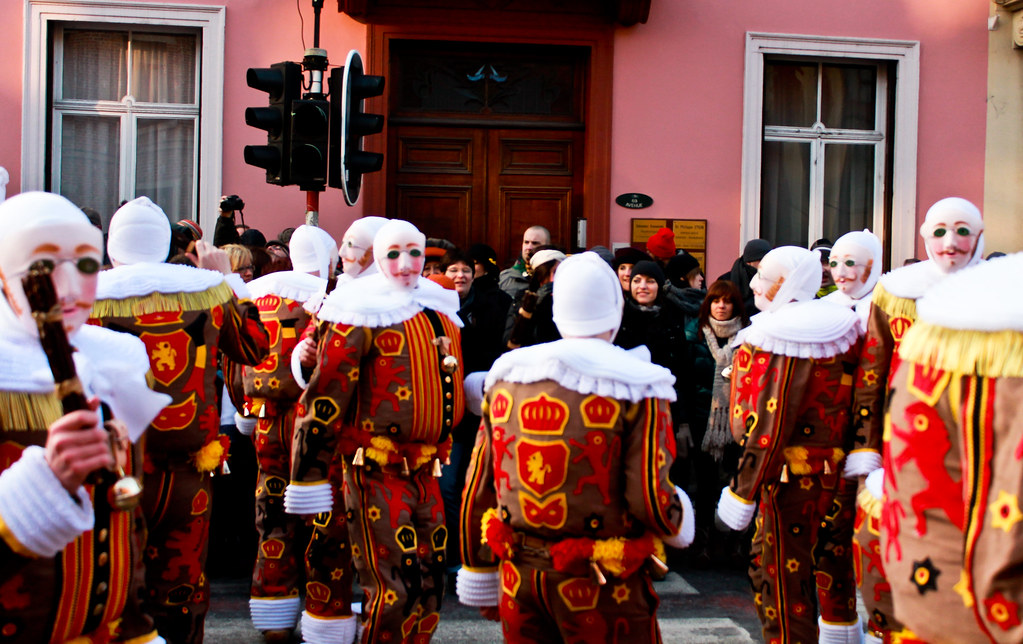
Binche’s ‘Gilles’ © hedhoodphoto / Flickr
Belgian and Dutch kids count their lucky stars for getting to greet Saint Nicholas or ‘Sinterklaas’ and his batch of presents every year before Christmas even arrives. A kind of second Santa, the good old man and his helper Black Pete visit every single house, in a single night, where kids have been good throughout the year. On the morning of December 6th, kids wake up to presents they’ve often asked for in a letter to ‘De Sint.’ While there has been some controversy brewing around the figure of Black Pete (whose face is black from all of the soot in the chimneys that he slides down to deliver presents) in the last couple of years, Sinterklaas remains a beloved Belgian tradition.
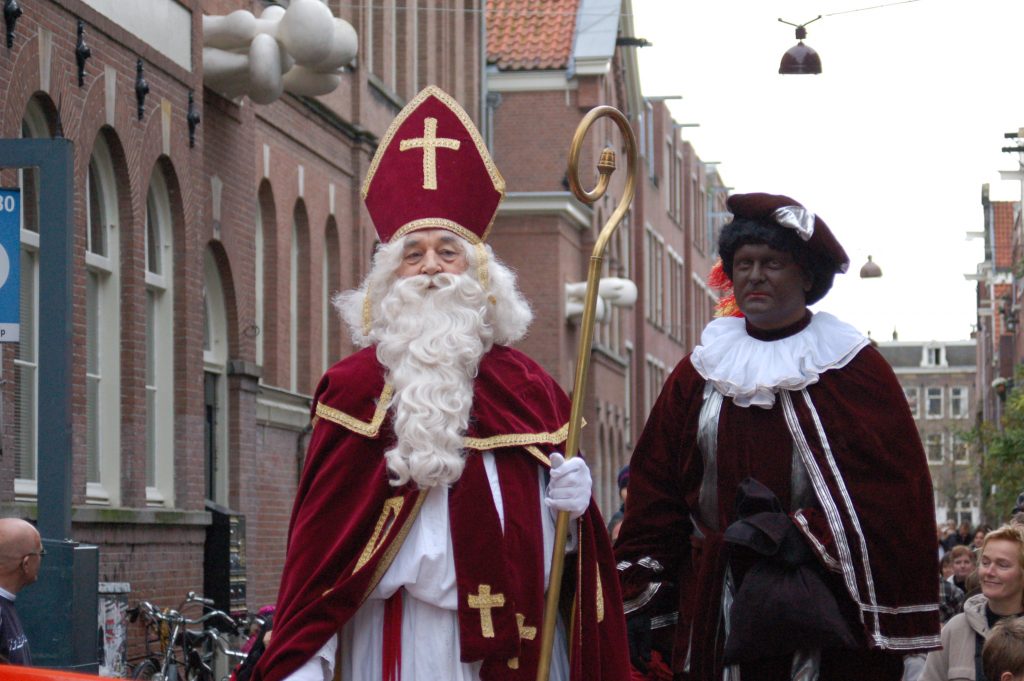
Sinterklaas and Zwarte Piet © Michell Zappa/WikiCommons
Though it’s hard for most non-natives to wrap their heads around, Flemish kids in the regions of the Kempen and the Hageland (and a few small regions in the Netherlands) actually go trick-or-treating on Old Year’s Day. There are no ghosts or vampires involved like with American Halloween, but candy-givers do get treated to short songs wishing them a happy new year. One of the cuter (and rhyming) songs features a pig with four feet and a tail, its charm sadly lost in translation. Most kids keep at it until noon, occasionally passing home to unload some of the sweet treats and warm up with hot cocoa.
Geraardsbergen (or Grammont), known for its hearty ‘mattentaart’ pastries, has also drawn attention for its ancient Krakelingen Festival and subsequent Tonnekes Fire. Recognized by UNESCO as Intangible World Heritage since 2010, the folkloric bread and fire feasts celebrate the end of winter by throwing 10,000 ‘krakelingen’ or ‘mastellen’ (donut-shaped pastries) into the masses from atop of the Oudenberg hill and lighting a huge fire on the summit. Before the dean, the mayor, and the city council members get to shower people with these doughy treats, however, they have to take part in a centuries-old ritual: drinking red wine out of a silver 16th-century goblet and swallowing the fish swimming in it. Animal rights activists have tried in vain to get them to switch to fishes made of marzipan, but so far, the town’s powers that be aren’t budging: they’ve sworn to uphold the slippery tradition for as long as they can.
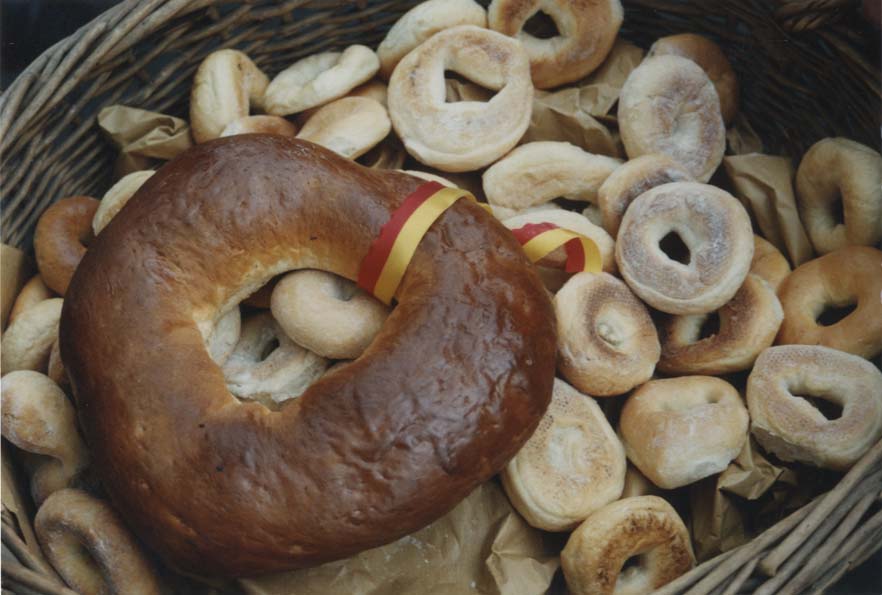
Krakelingen from Geraardsbergen © Jan Coppens/Wikimedia Commons
The Wallonian village of Malmédy is just as proud of its Giant Omelet Festival. Every August, the members of the town’s Omelet Brotherhood don towering chefs hats, break 10,000 eggs and start frying their pride and joy in a skillet four meters in diameter. A marching band and clucking chicken mascots entertain people while they watch the cooks stir with their giant wooden spoons and wait for an omelet piece to come their way.
The slumbering Walloon town of Ath turns into a veritable ‘City of Giants‘ each year during the fourth weekend in August. For centuries, Goliath and his fresh-faced bride, the long-haired Samson, the mythical horse Bayard, and other oversized dolls have been taking over, drawing thousands of folklore lovers as they get married, get into biblical brawls, and generally parade around like they own the place.
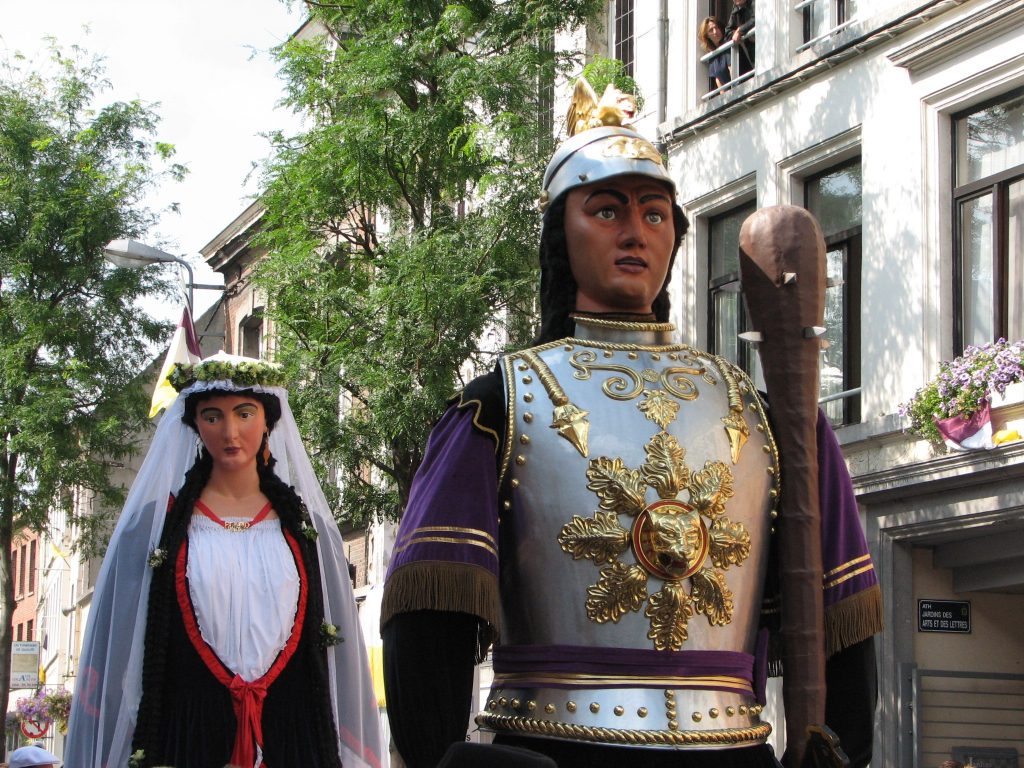
Mr and Mrs Goliath © Daniel Leclercq/WikiCommons
‘La Doudou’ is what Mons locals lovingly call their most famous festival. It still celebrates that time in the 14th century when a desperate procession of the remains of miracle worker St. Waudru magically worked in getting rid of the plague. To this day, the relic is paraded around on the Cart d’Or, an ornate, horse-pulled buggy, on Trinity Sunday, and the crowd has to jump in and help the animals get the gilded thing up a serious slope; if they don’t succeed, legend has it that the city could suffer terrible consequences. Once on the main square, the ‘Lumeçon’ can commence. During this fierce fight between St. George and his horse versus a large wickerwork dragon, members from the audience jump forward to grab one of the horse hairs attached to the creature’s tail. The battle is a boisterous affair, and participating audience members often operate on a little liquid courage.
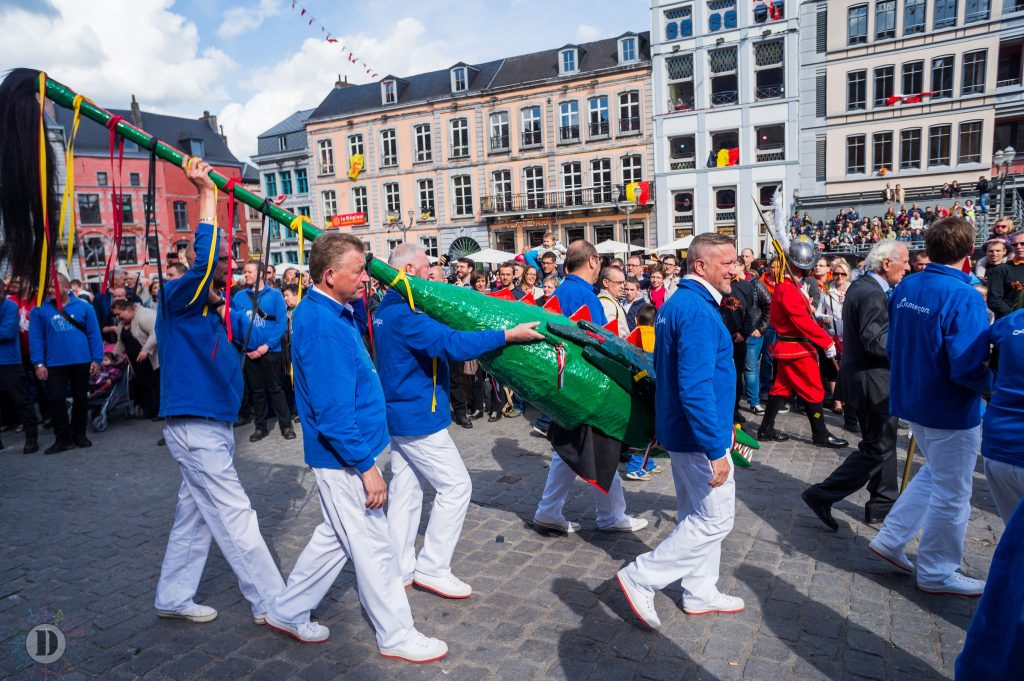
Mons’ wicker dragon being carried to the fight © David Taquin/Flickr
Every single August 9th, a ‘tree of joy’ or ‘meyboom’ must be planted in Brussels before the clock strikes 5pm. If not, it would be a surrender to the people of Leuven, a shame too great to bear – at least according to the Brusselaars. The ritual of the maypole stretches back all the way to the early 13th century when the people of Brussels claim that they were celebrating a wedding when they fought off an attack from the Leuvenaars and planted a beautiful young beech to celebrate. The Leuvenaars, on the other hand, remember quite acutely that they stole the true maypole from Brussels in 1974, so it was never up by 5pm that year. They too have been planting their ‘one and only true maypole’ with a big folk feast ever since.
New Year’s Day – January 1st
| All Saints’ Day – November 1st
|
Easter and Easter Monday
| Armistice Day – November 11th
|
Labour Day – May 1st
| Christmas – December 25th
|
Ascension Day (6th Thursday after Easter)
| Federal public services are also closed on November 15th as it is King’s Day. |
Pentecost and Whit Monday (7th Sunday and Monday after Easter) Belgian National Holiday – July 21st
| |
Assumption Day – August 15th
|